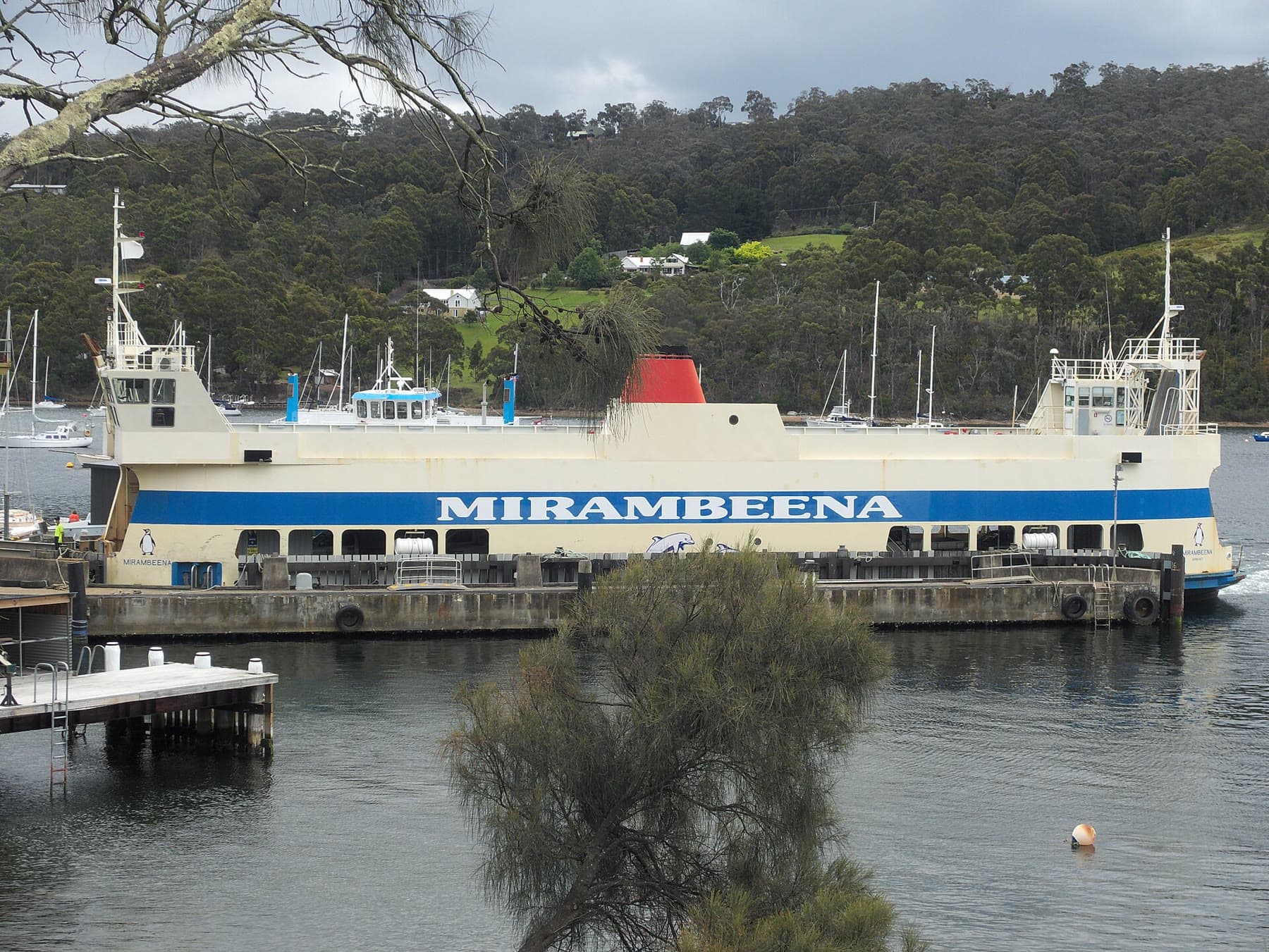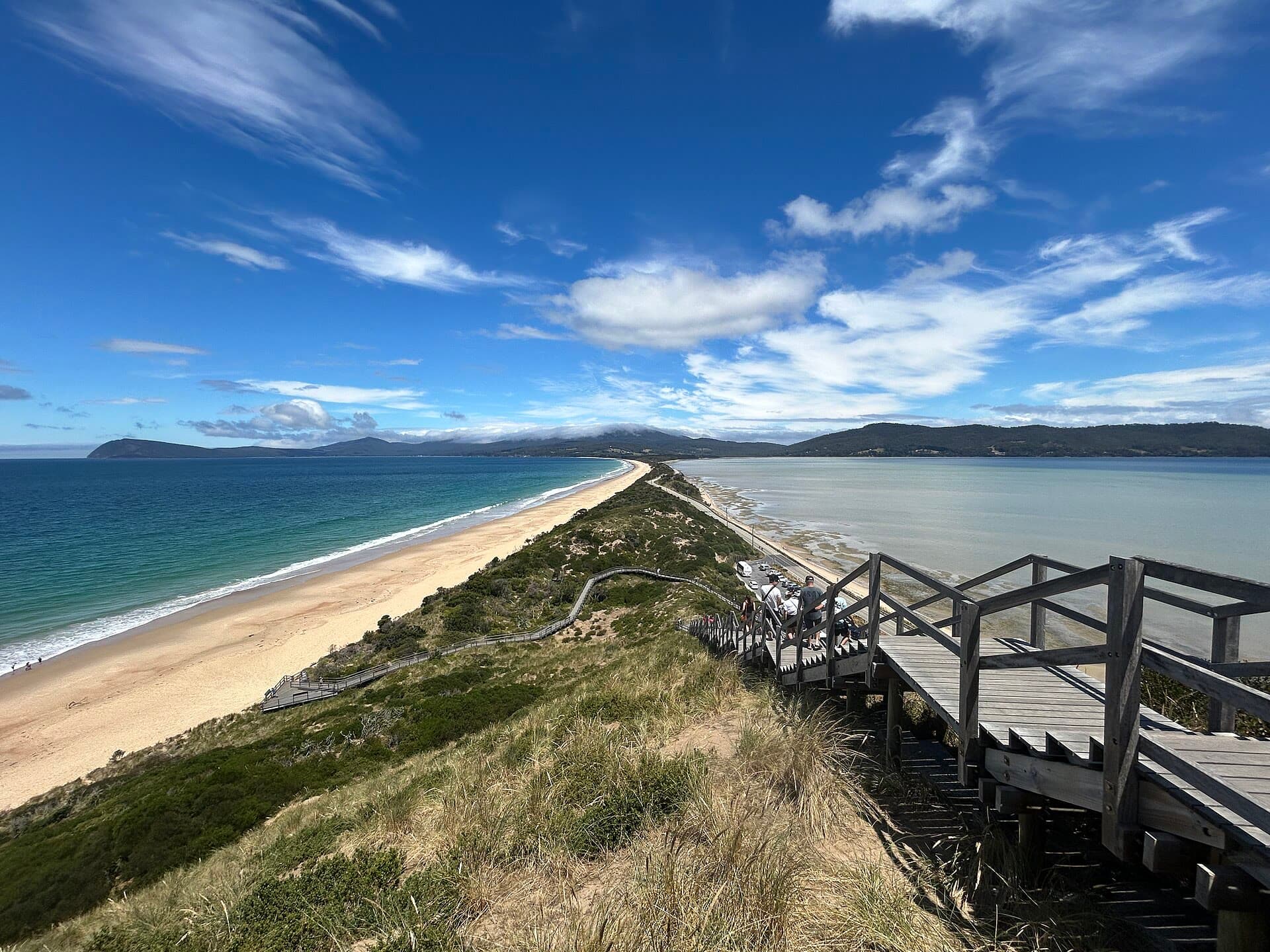
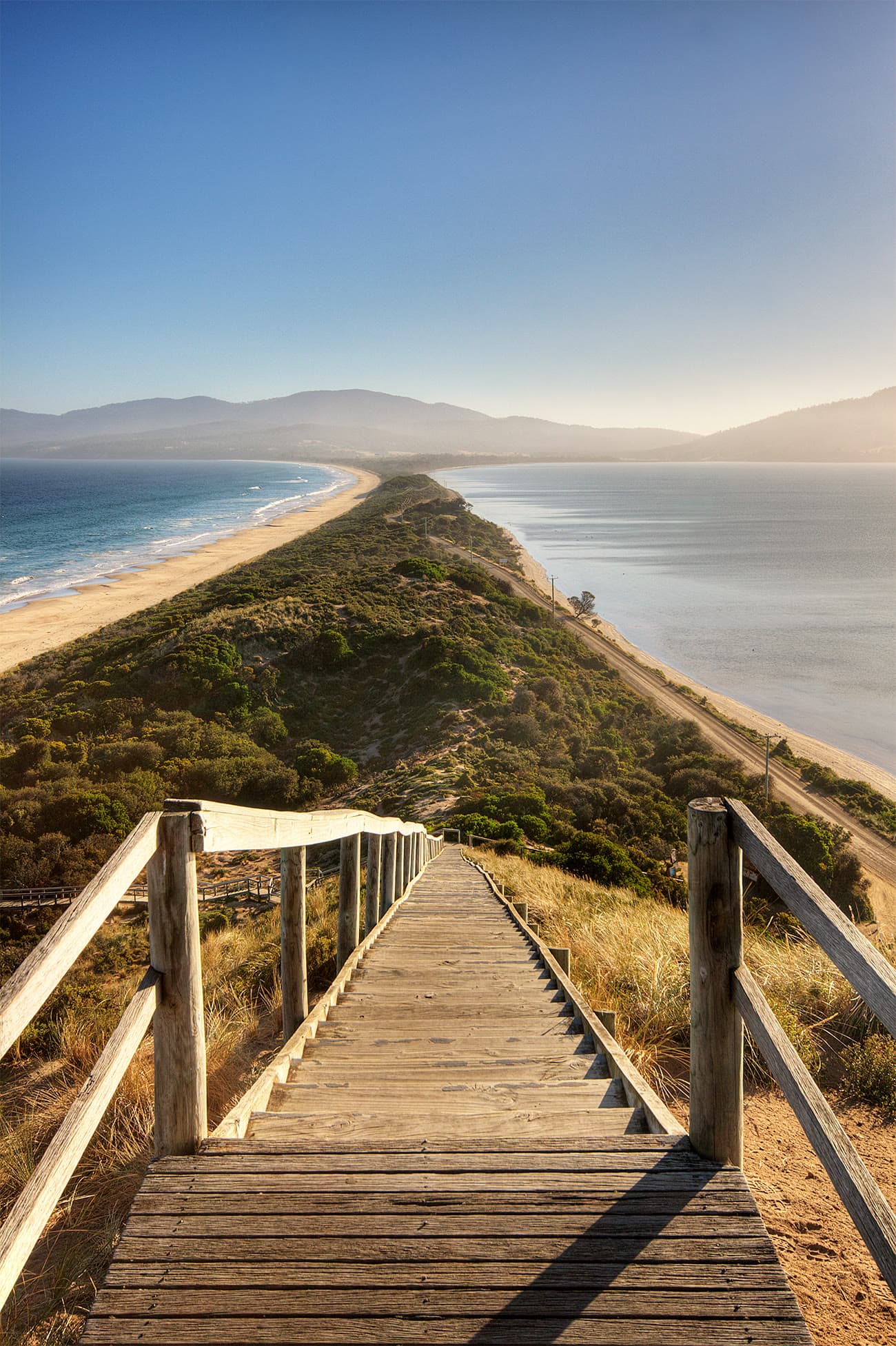
Bruny Island sits off Tasmania’s south-east coast, separated from the mainland by the D’Entrecasteaux Channel. It is really two islands — North Bruny and South Bruny — joined by a narrow sandy isthmus called The Neck. The only way on for most visitors is the vehicle ferry from Kettering, about 35–45 minutes’ drive south of Hobart, which makes Bruny one of the most popular day trips in Tasmania and a superb place to slow down for a night or two.
- ~20 minferry crossing, Kettering to Roberts Point
- 2 islandsNorth and South Bruny, joined at The Neck
- ~50 kmfrom the northern tip to Cape Bruny
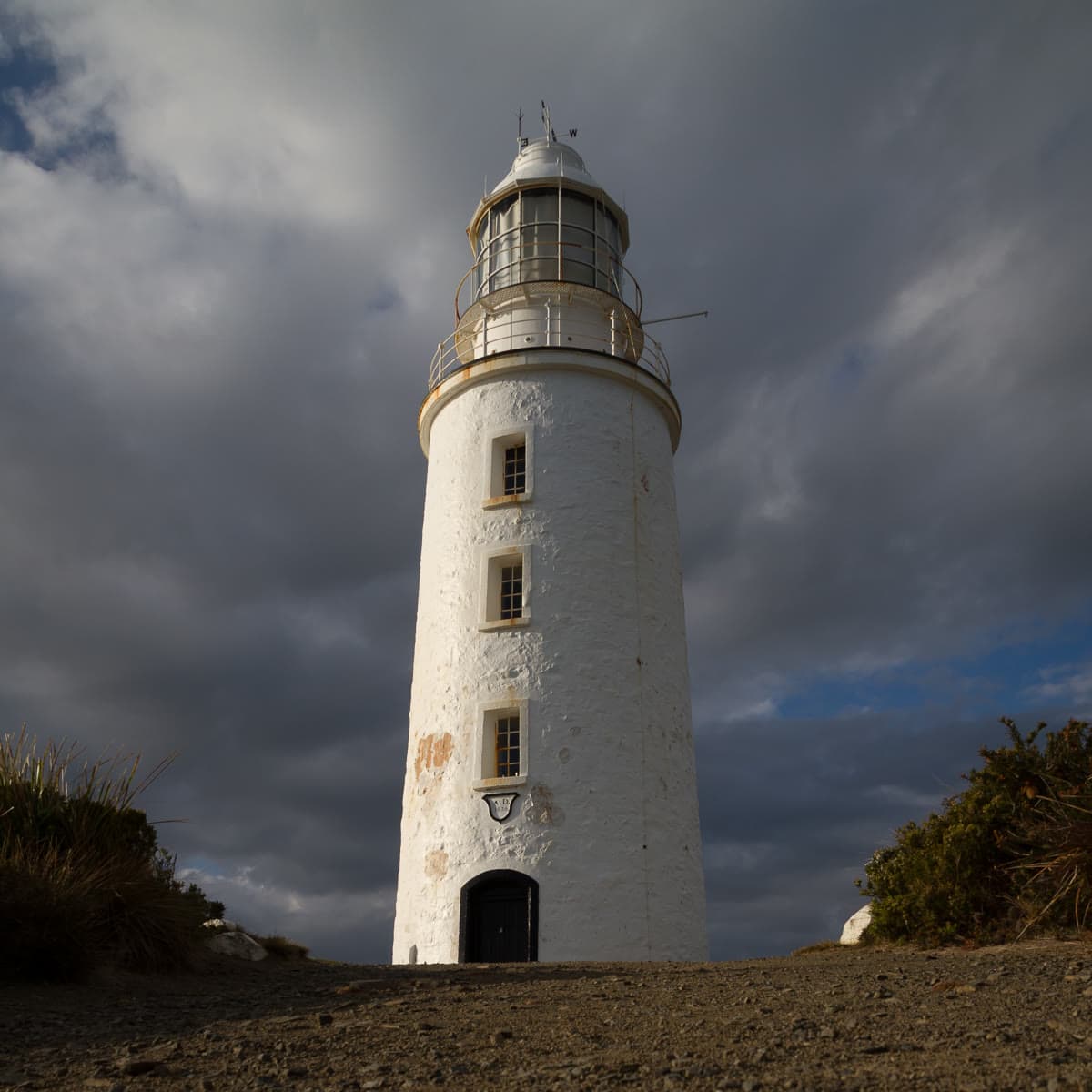
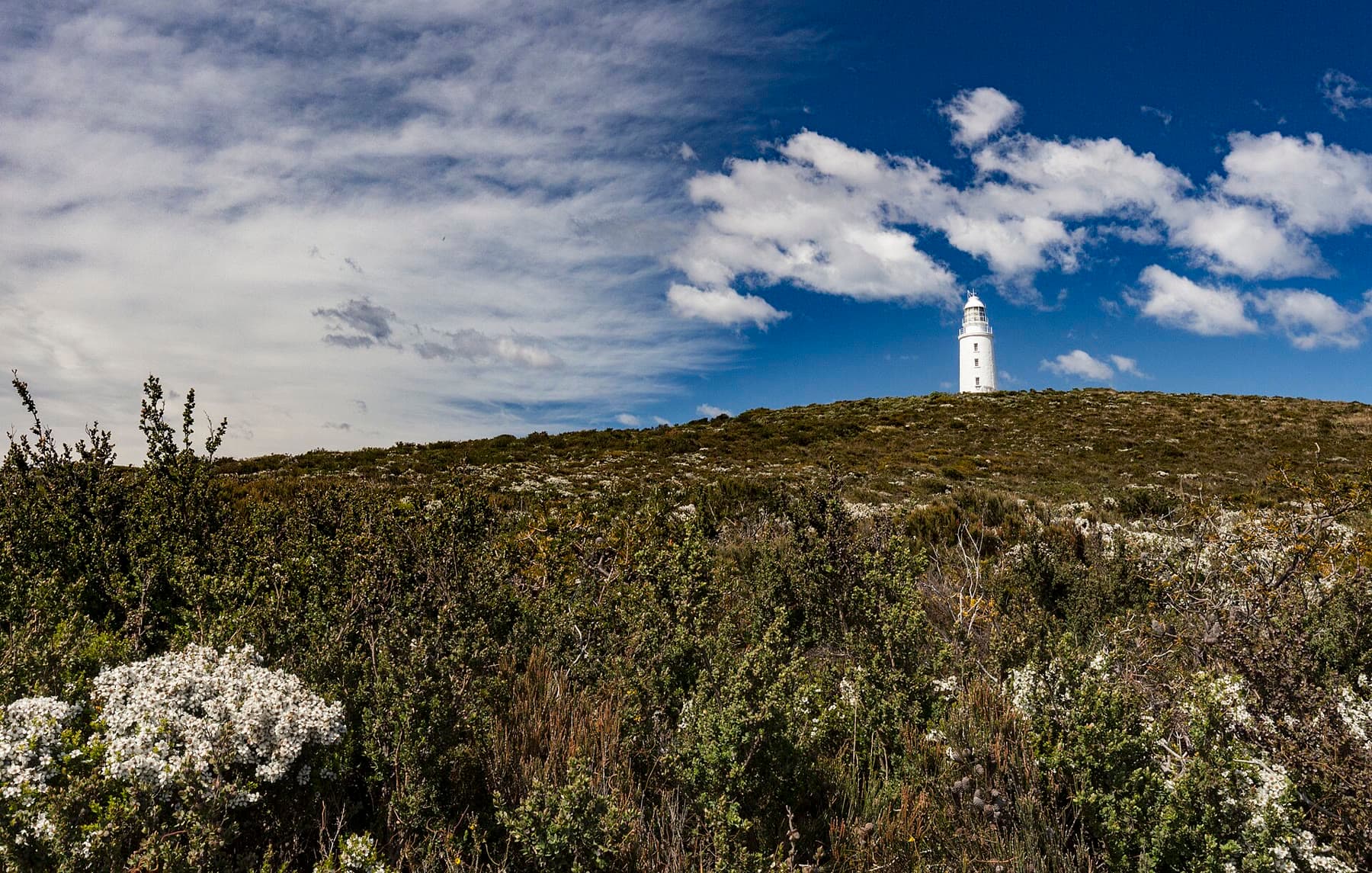
- 1830sCape Bruny Lighthouse first lit
Staying in Hobart without a car?
Most Bruny visitors are based in Hobart, and the ferry, gravel roads and long distances on the island make a guided day the easiest way to see the highlights. This tour is the closest match to what most first-timers want: the lighthouse, The Neck and the food producers in one day.
What makes Bruny special
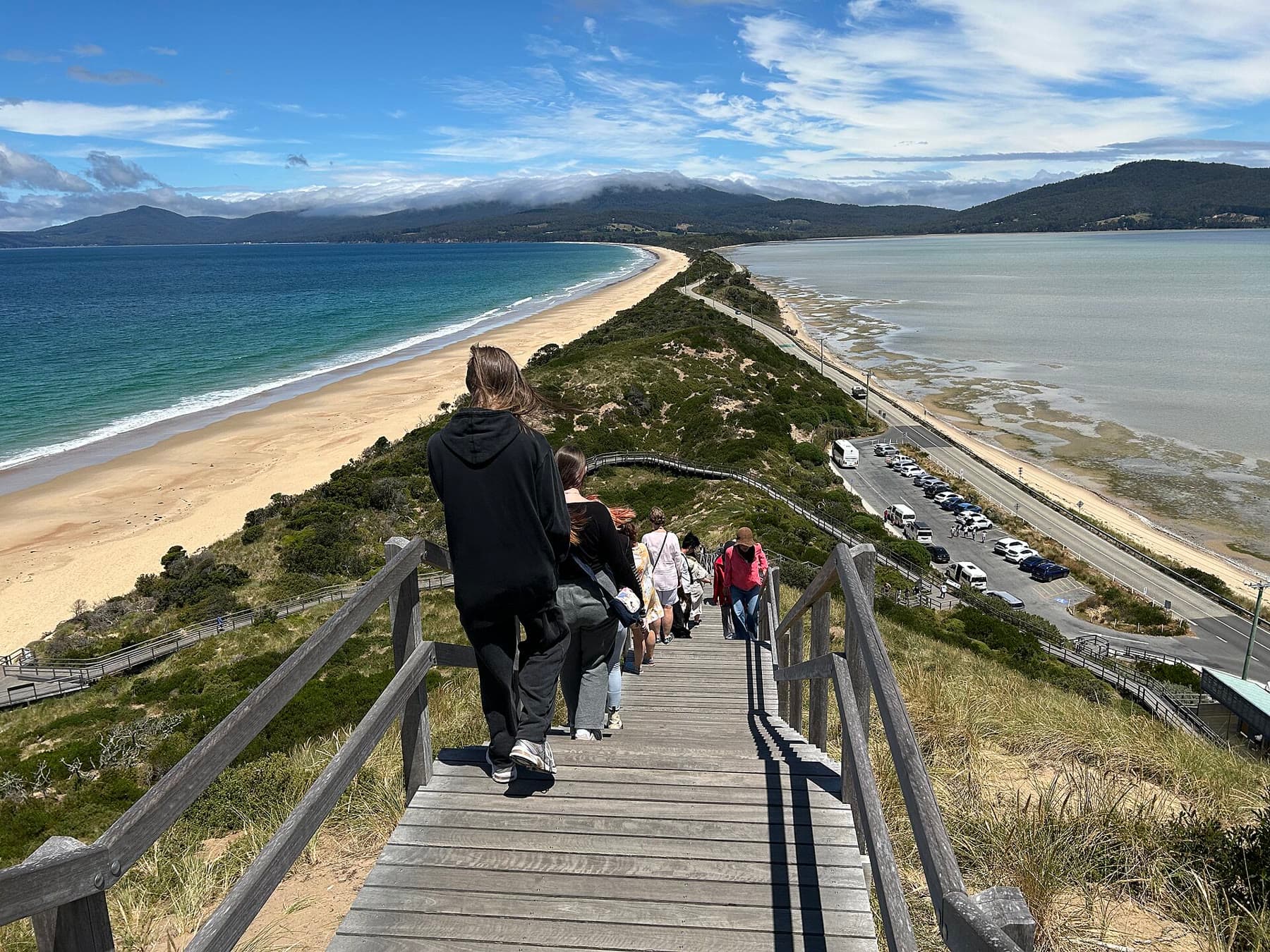
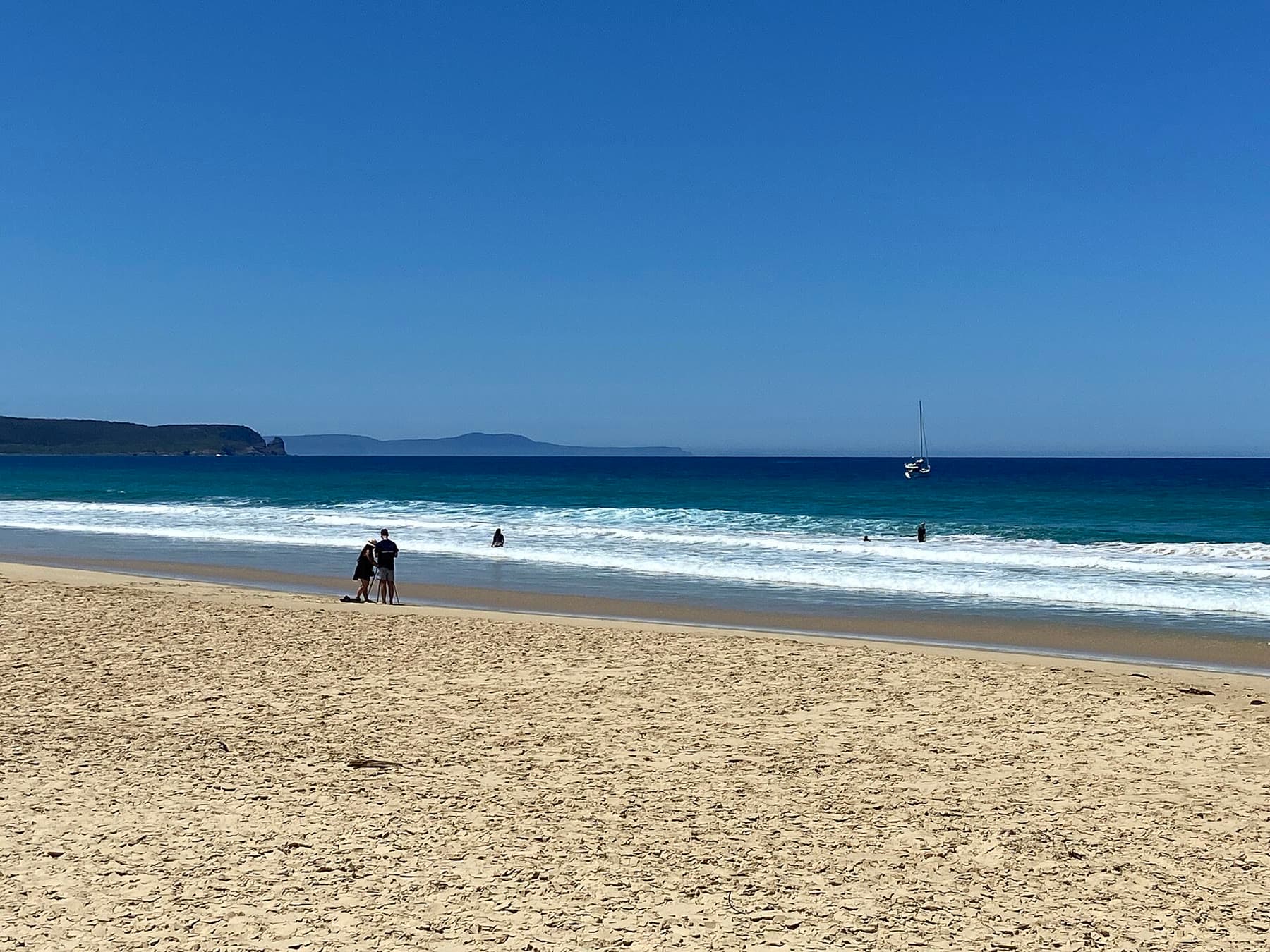
The landscape. The view from the Truganini Lookout over The Neck — a ribbon of sand with Adventure Bay on one side and Isthmus Bay on the other — is one of Tasmania’s signature panoramas. South Bruny National Park protects towering dolerite cliffs at Fluted Cape, the surf beach at Cloudy Bay and the heathland and forest of the Labillardiere Peninsula.
The wildlife. Bruny is famous for its white wallabies, a pale form of the Bennett’s wallaby often seen around Adventure Bay at dawn and dusk. Little penguins and short-tailed shearwaters return to burrows at The Neck in the warmer months, fur seals haul out on The Friars, and birdwatchers come for the island’s endemic species, including the endangered forty-spotted pardalote.
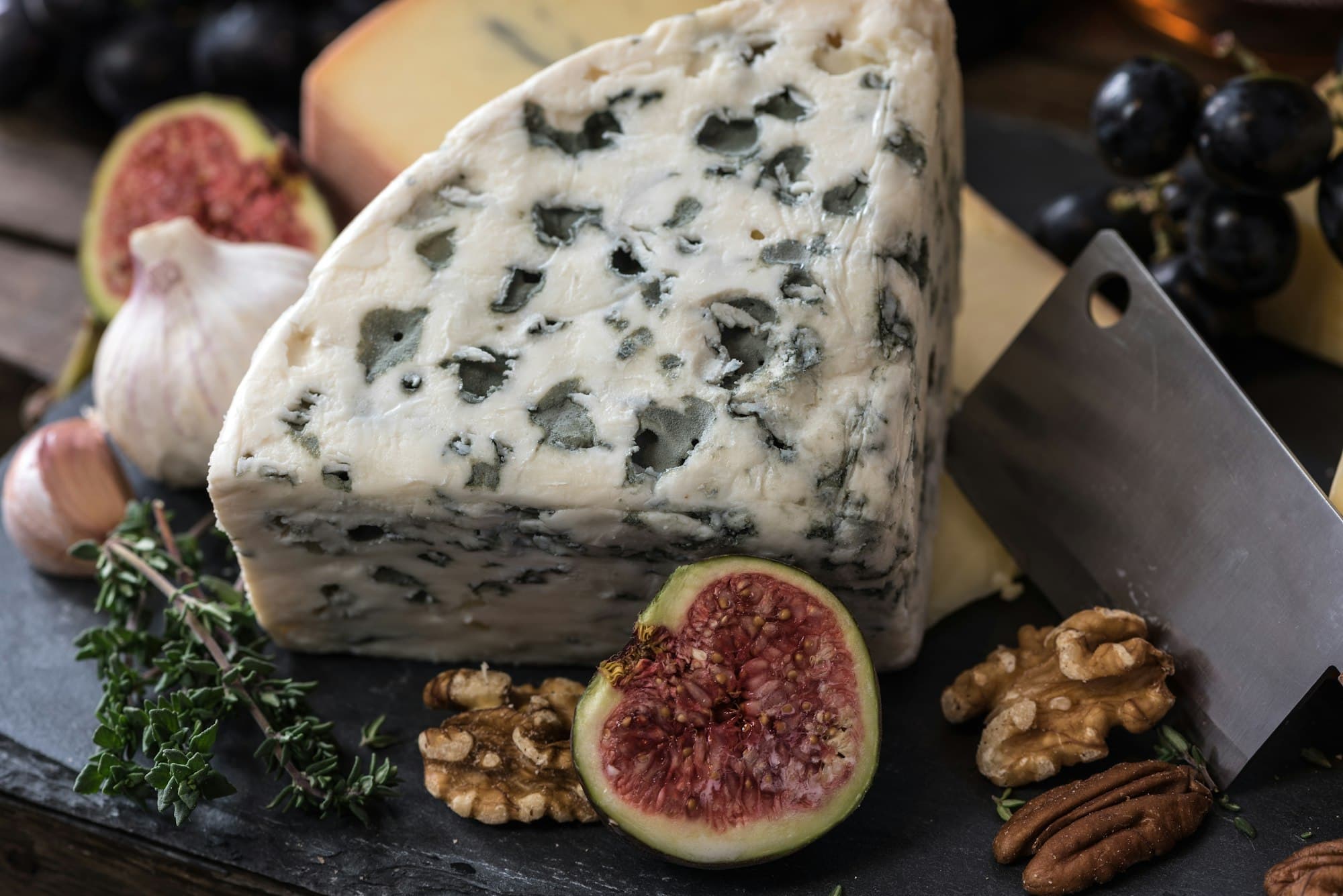
The food. For a small island, Bruny punches far above its weight: cheese, oysters, whisky, honey, chocolate, berries and wine are all produced or sold here, and a loose “producer trail” links them along the main road. Our food and drink guide lists the stops.
The sea. The Bruny Island wilderness cruise is one of Tasmania’s best-known boat trips, running beneath sea cliffs and through sea caves to the seal colony at The Friars. See our Bruny Island cruises guide.

Plan your visit in five steps
- Decide how you’ll get there. Driving yourself means taking the Bruny Island ferry from Kettering. Without a car, a guided tour from Hobart is the practical option — there is no public transport on the island.
- Choose how long to stay. One day covers the highlights at a brisk pace; two days let you add the lighthouse, a long walk and a dusk penguin visit. See how many days you need.
- Pick your season. Summer brings long evenings and penguins; autumn is calm and golden; winter is quiet and moody. Read the best time to visit.
- Book the big-ticket experiences early. Cruises, lighthouse tours and summer accommodation fill up in school holidays.
- Bring a parks pass. A Tasmanian National Parks Pass is required for South Bruny National Park, including the lighthouse precinct.
Popular ways to spend a day
- The classic loop: ferry, Truganini Lookout at The Neck, Adventure Bay, lunch, Cape Bruny Lighthouse, producer stops on the way back. Our one-day itinerary maps it out.
- Cruise day: the 3-hour wilderness cruise from Adventure Bay, then a gentle afternoon of tastings.
- Walker’s day: Fluted Cape in the morning, Cloudy Bay beach in the afternoon.
Getting oriented
North Bruny is pastoral and quiet, with small settlements at Dennes Point and Barnes Bay and the ferry terminal at Roberts Point. South Bruny holds most of the attractions: Adventure Bay, Alonnah, Lunawanna, the national park and the lighthouse. Distances are longer than they look and many roads are gravel — allow more time than your map app suggests. See getting around Bruny Island.
Bruny Island is the traditional Country of the Nuenonne people, and the island holds deep significance for Aboriginal Tasmanians. Our history page gives a brief overview.