Getting there
How to get to Bruny Island from Hobart
A Channel Highway drive, a short car ferry, and a long island on the other side. Booking belongs on the official SeaLink site — not here.
- Hobart to Kettering
- ~40 min
- Typical crossing
- ~15 min
- Mainland terminal
- Kettering
- Bruny terminal
- Roberts Point
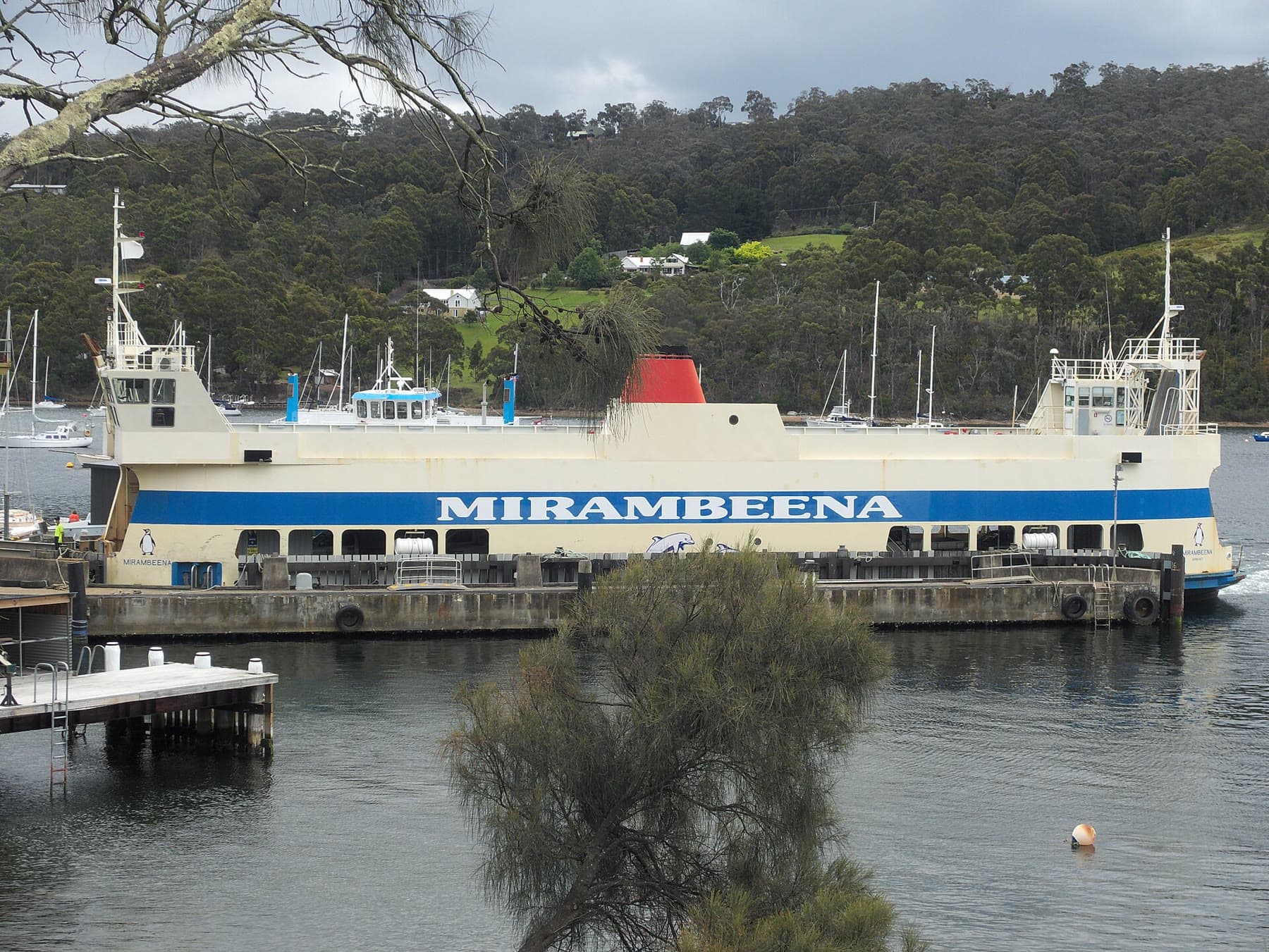
You get to Bruny Island from Hobart by driving about 40 minutes to the Kettering ferry terminal and crossing D’Entrecasteaux Channel on the SeaLink vehicle-and-passenger ferry to Roberts Point. The water crossing itself is about 15 minutes; queues, loading, and peak-day waits can take longer than the sailing.
Definition
Bruny Island ferry. The scheduled vehicle and passenger service operated by SeaLink between Kettering on the Tasmanian mainland and Roberts Point on North Bruny. It is a car ferry, not a tourist cruise.
Verify. Hours, prices, tour operators, and property details change. Confirm with the business or Parks Tasmania before you travel. This guide is independent and informational only.
The short version
Hobart to Bruny is a drive + ferry, not a flight and not a cruise. Parks Tasmania’s own directions match the visitor pattern: Kettering is about 40 minutes from Hobart via Kingston on the A6 and then the B68 Channel Highway; the ferry ride is about 15 minutes and lands at Roberts Point on North Bruny.
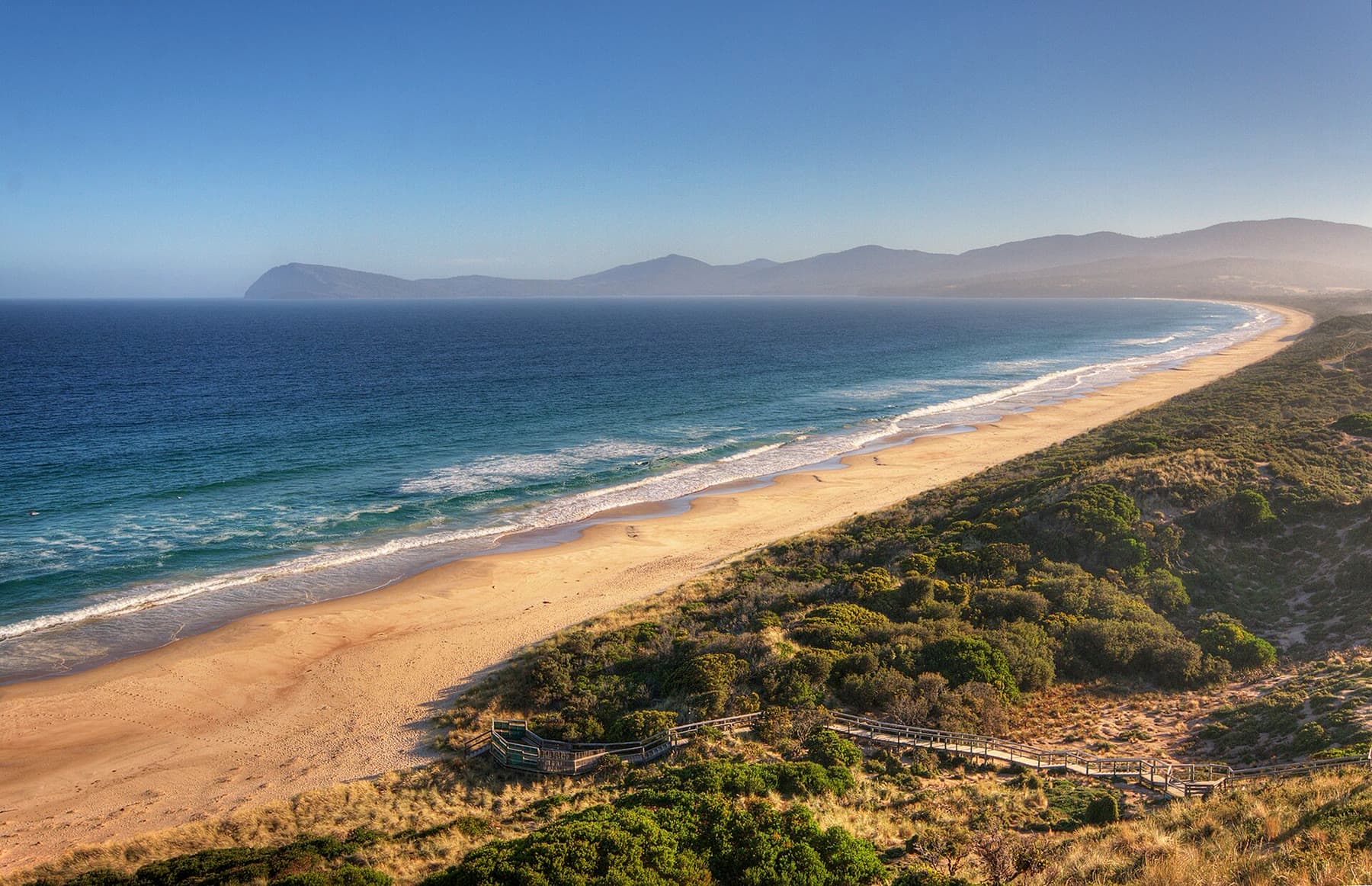
From Roberts Point you are not “there” in the postcard sense. The Neck, the food trail, Adventure Bay, and Cape Bruny Lighthouse are all further south. The lighthouse is about 1 hour 15 minutes from the ferry terminal if you do not stop. That single number is why day-trippers who treat the crossing as the whole journey run out of afternoon.
Do not use this page as a timetable
Live ferry times, fares, vehicle-size rules, and booking requirements belong on the official operator:
SeaLink Bruny Island / SeaLink Tasmania
This guide will not invent a morning sailing, a last-return time, or a price. Operators change seasonal patterns. Peak periods — Tasmanian school holidays, January, Easter, and long weekends — are when visitors get this wrong. They leave Hobart at a café hour and meet a queue that eats the lighthouse.
Even when walk-up travel is allowed, arrive early on busy days. The delay is almost never the 15 minutes on the water. It is the line of cars on the Kettering approach, the loading of vans and trailers, and the sailing you thought you would “just make.”
If the official page offers a booking product for your date, and you are travelling in high summer or at Easter, use it. An independent guide that prints “no booking required” as if it were permanent is how people miss a crossing.
Is there a car ferry?
Yes. The Bruny service is a car ferry that also takes foot passengers. If you want The Neck, cheese, oysters, and a beach in one day, take a car or join a tour that already has one.
Walk-on makes sense if:
- you have already booked a cruise or food tour that collects you on the island or at the terminal
- you are staying within a short hop of Roberts Point and have arranged a lift
- you are cycling and have checked the island’s hills, distances, and ferry bicycle process on the official site
It is a poor plan to land on foot and “figure it out.” There is no urban bus grid. Hitching is not a timetable. The island is long enough that a missed lift becomes an expensive taxi story — if you can find one.
Commercial day tours from Hobart exist because this logistics problem is real. They are a different product from self-drive: someone else holds the ferry and the sequence. Verify the operator, inclusions, and whether The Neck lookout is actually in the itinerary before you pay.
The drive from Hobart
These are drive times, not a schedule:
- Hobart CBD to Kingston on the A6, then the Channel Highway (B68) through the channel towns toward Kettering — about 40 minutes in clear traffic. Add time if you are leaving the city in a weekday peak or collecting a hire car.
- Terminal buffer — 20–60 minutes depending on the day. More at peaks. Treat this as part of the journey, not optional courtesy.
- Crossing — about 15 minutes plus loading and unloading.
- Roberts Point to The Neck — roughly 15–20 minutes south on the main island road.
- The Neck to Adventure Bay — another 15–20 minutes.
- Roberts Point to Cape Bruny Lighthouse — about 1 hour 15 minutes via Alonnah and Lunawanna, then Lighthouse Road (C629). Part of the south is unsealed.
Add food stops and a lookout climb and a “quick day trip” is already a full day. Read the day-trip itinerary before you promise Cape Bruny to anyone in the car.
The Channel Highway is a real road with real locals. It is not a motorway. Allow the drive to be scenic and occasionally slow. Kettering itself is a small terminal settlement, not a city interchange with six overflow car parks.
What the terminals are like
Kettering is the mainland side: a waiting area, a queue discipline that matters on busy days, and a stretch of water you will photograph once and then ignore because you are watching the line of cars. Follow staff direction. Do not invent a second lane on the approach.
Roberts Point is the Bruny side. You land on North Bruny. The temptation is to linger because you have “arrived.” Unless you are staying at Dennes Point or Barnes Bay, the useful move for first-timers is to drive south toward The Neck and Great Bay. The terminal is a hinge, not a destination.
If you are returning the same day, confirm the official return window before you get excited about Adventure Bay. The sailing you remember from a blog is not a booking.
Fuel, cash, food, and night driving
Parks Tasmania’s visitor notes are worth treating as rules of thumb, not folklore:
- Fill up before you leave the mainland if you can. Fuel on the island has historically been limited — Adventure Bay General Store is the usual mention. Verify current hours and whether pumps are on when you arrive.
- Do not assume an ATM. Carry a card and a little cash for honesty boxes or a parks process that still wants notes.
- Night driving kills wildlife. Pademelons, wallabies, and the occasional larger animal use the same roads you will use after penguin viewing at The Neck. Drive slowly. Never stop in a travel lane for a photograph.
- Public toilets exist at key visitor sites; they are not a city grid. Plan like you are leaving suburbia.
If you are staying overnight, read where to stay before you treat the last sailing as a personality. If you are day-tripping, pack water and a layer — the channel and The Neck do not share Hobart’s weather.
Booking, in one paragraph
Check the official SeaLink site for whether you need to book on your date. Some seasons and some vehicle types have been walk-up; some peak systems have used bookings. Oversize vehicles, campervans, and trailers can have extra rules — those also belong on the operator site, not in a guessed sentence here. If the official page offers a booking, and you are travelling in January or at Easter, use it in both directions. Your outbound can be flexible; your return should not be a shrug.
This website does not sell tickets, hold allocations, or “know a guy at the ramp.”
After you land
Most first-time visitors should drive south toward The Neck rather than touring North Bruny “because we are here.” North Bruny has quiet roads, Dennes Point, and walks of its own, but they are a different trip from the postcard day. Spend attention on the isthmus and the Great Bay food stops if you only have hours.
A sane first-day shape:
- Land at Roberts Point.
- Drive south to The Neck. Climb if you can. Photograph. Leave with slack.
- Eat at Great Bay — cheese and oysters are the usual pair. See the food guide.
- Add Adventure Bay only if the official return sailing still has margin.
- Do not add Cape Bruny Lighthouse unless you started very early or you are staying the night.
Common mistakes
- Treating “15 minutes” as the whole transfer from Hobart.
- Leaving the city at a civilised 10:00 in January and wondering why the lighthouse vanished.
- Landing as a foot passenger with no pre-arranged onward travel.
- Using this page, a screenshot from 2019, or a rideshare anecdote as a timetable.
- Cutting the return to ten minutes because “the ferry is frequent.” Frequency is an operator fact, not a feeling.
Accessibility, briefly
The ferry is the most structured piece of the Bruny journey — staff, a ramp, a waiting pattern. Historic lookout stairs, unsealed southern roads, and the steep path to the lighthouse are not. If mobility is limited, prioritise the food trail and the isthmus at road level, and treat the tower climb as a maybe after you have read the Parks notes. Confirm current access details with SeaLink and Parks Tasmania; do not use this paragraph as a disability-access audit.
Official links, again
- SeaLink Bruny Island — times, fares, booking rules
- Parks Tasmania — South Bruny National Park — passes, walks, camping
- Parks Tasmania — Cape Bruny Lighthouse
If you want the packing-sequence version of a same-day return, read the day-trip journal note. If the crossing already looks like the easy part and the day looks tight, keep a night.
Walk-on passenger vs taking a car
| Compare | Foot passenger | Vehicle |
|---|---|---|
| What the ferry carries | People without a car can travel as foot passengers. | Most visitors take a car, camper, or tour coach. |
| Once you land | You will need a pre-booked tour, a lift, or a bicycle. The island is long. | You can reach The Neck, Great Bay, Adventure Bay, and (with time) Cape Bruny. |
| Peak days | Usually simpler to board; still check the official process. | Vehicle queues are the delay — not the 15 minutes on the water. |
| Booking | Confirm current walk-on rules on the SeaLink site. | Confirm whether a vehicle booking is required for your date. Rules change. |
Questions
What visitors always ask
Drive about 40 minutes from Hobart to Kettering via Kingston (A6) then the Channel Highway (B68), and take the SeaLink ferry to Roberts Point. Check the official operator for today’s sailings and fares.
Once you know the crossing, plan the day
The ferry is the easy part. The decision is whether The Neck and the food trail are enough, or you should keep a night for penguins and the lighthouse.