South Bruny National Park
Cape Bruny Lighthouse visitor guide
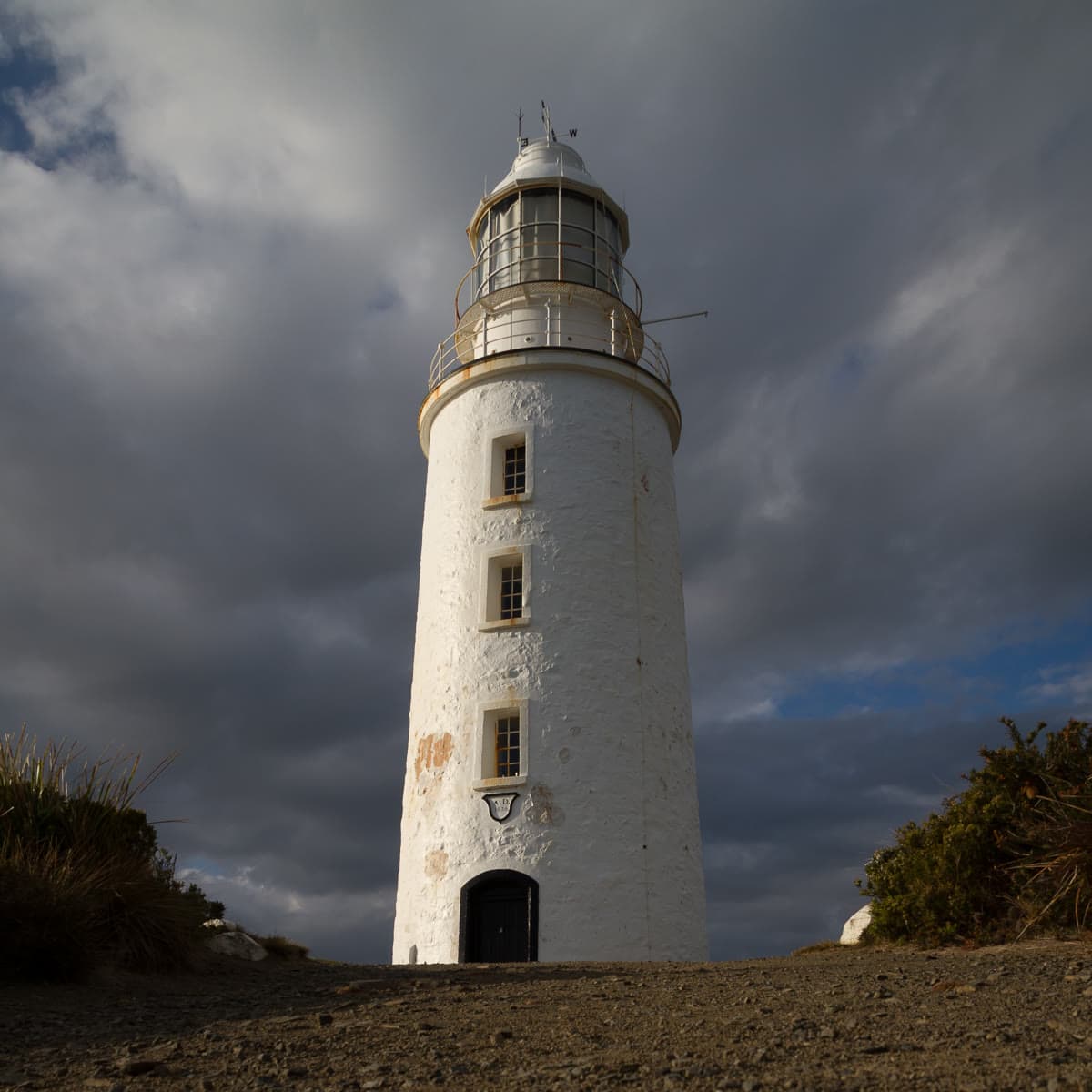
A short white tower on a very high cliff — convict-built, Chance-lanterned, and further from the ferry than day-trippers expect.
- Built / first lit
- 1836 / 1838
- Tower height
- 13 m
- Height above sea
- 114 m
- From the ferry
- 1 hr 15
Cape Bruny Lighthouse is an 1838 light (tower built 1836) on the dolerite cliffs of South Bruny National Park. The tower is 13 metres tall but stands 114 metres above sea level because of the cliff. Parks Tasmania describes it as the second-oldest lighthouse in Australia. It is about 1 hour 15 minutes’ drive from the Roberts Point ferry terminal and requires a valid parks pass.
Definition
Cape Bruny Lighthouse. A historic stone lighthouse — third in Tasmania and fourth in Australia when first lit — now inside South Bruny National Park. The original light was extinguished in 1996 and replaced by a nearby solar beacon.
Verify. Hours, prices, tour operators, and property details change. Confirm with the business or Parks Tasmania before you travel. This guide is independent and informational only.
The facts you can cite
Parks Tasmania’s page is the backbone of this guide. If a number here ever disagrees with Parks, believe Parks.
- Built 1836, first lit 1838.
- Tower 13 metres; because of the cliff, the light sat 114 metres above the sea.
- Third lighthouse in Tasmania, fourth in Australia when lit.
- Parks also calls it the second-oldest lighthouse in Australia.
- Commissioned by Governor George Arthur after wrecks on the southern coast.
- Original Wilkins lantern burned sperm whale oil at a punishing rate; a Chance Brothers lantern replaced it in 1901–03.
- Electrified 1959. Lit for the last time in 1996, replaced by a solar light nearby.
- Added to South Bruny National Park in December 2000.
- Only southern Tasmanian lighthouse open for tours.
The next land south, as the visitor line goes, is a long way toward Antarctica. That is the mood, not a navigation instruction. The dolerite cliffs are the same geology you see from a wilderness cruise; here you stand on top of it.
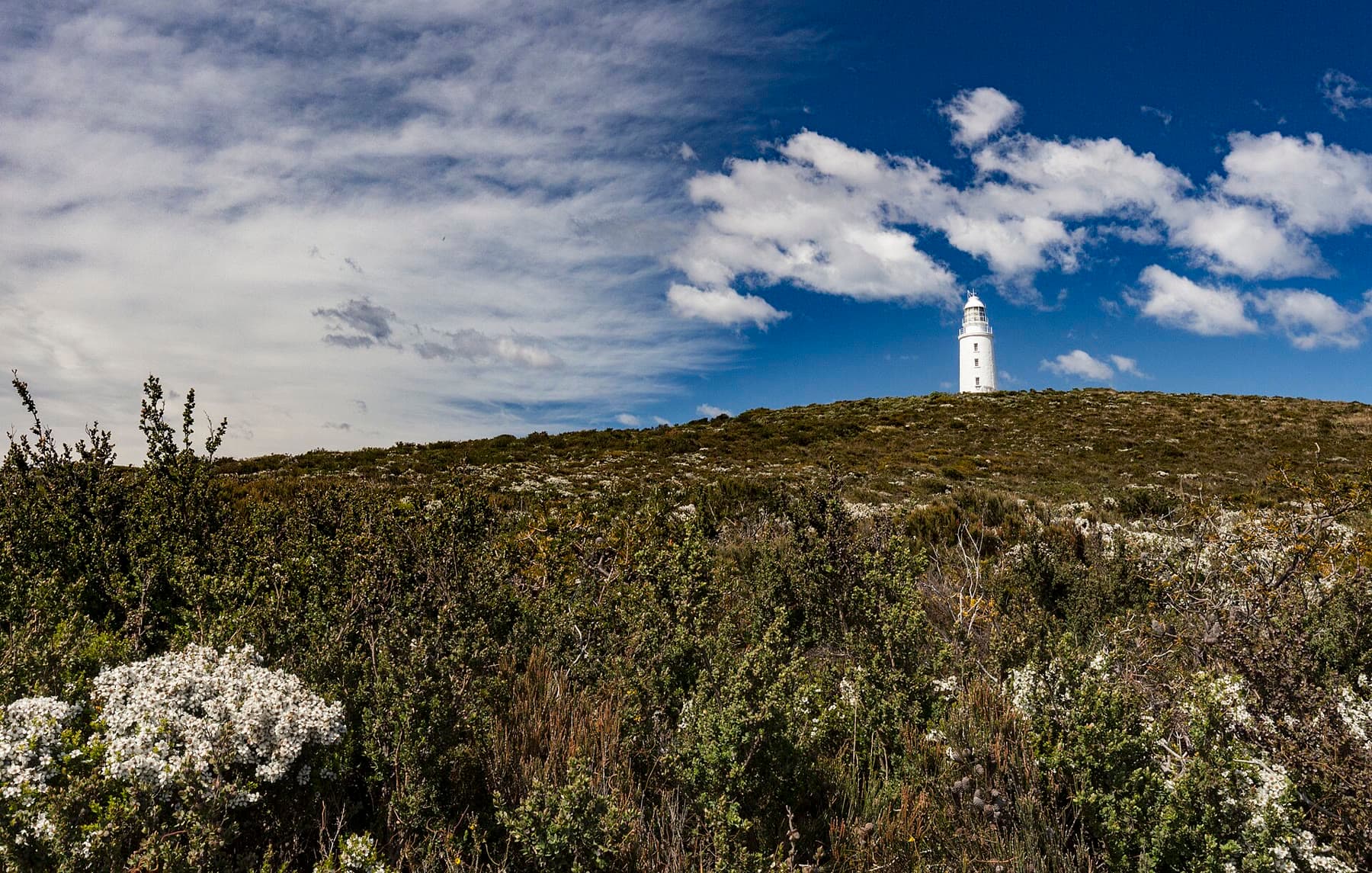
This is not a tall city tower. It is a short white column on a very high cliff — which is why photographs look monumental and why the walk from the car park is the first test.
How to get there
- Ferry from Kettering to Roberts Point.
- Bruny Island Main Road south through Alonnah.
- At the Lunawanna T-junction, take Lighthouse Road (C629).
- About 20 km to the car park.
Allow 1 hour 15 minutes from the ferry without stops. Part of the road is unsealed. Unprotected cliff edges in the grounds — supervise children. A low sedan can do this road when it is dry and you are patient; corrugations after weather are why some visitors wish they had a higher clearance. We will not invent a “2WD impossible” rule. Drive to the conditions.
Parks lists vehicle access to the grounds around 9:30–16:30, with pedestrian access outside those hours. Verify on the day; gate practice can change.
Is it a day trip from Hobart? It is a long day if you also want The Neck and the food trail. Overnight on the south or west side — Lunawanna or Alonnah — is the calmer plan. See where to stay.
The lighthouse is not on the way to the oysters. It is a destination at the end of Lighthouse Road. If you only have a day from Hobart, this is usually the stop to drop.
Tours, museum, and the path
You need to climb a steep path to the base of the tower. The spiral and the view from the top are for guided tours only. Parks points visitors to Cape Bruny Lighthouse Tours, including the possibility of sunset tours on request. We do not publish a price or a daily timetable — both move. Confirm current tour times with the operator listed on the Parks lighthouse page.
By the car park there is a small lightstation museum of maritime objects. A track toward the beach passes a grave site thought to belong to two children from 1875 and 1898, then an old dry-stone garden wall. It is a quiet, specific place. Stay on formed paths.
The grounds alone are worth the drive if you like weather and cliff-line. The climb is the extra if you have booked it and you are comfortable on tight historic stairs. It is not a pram climb and not a wheelchair path.
Parks pass and what “in the park” means
Yes, you need a parks pass. The lighthouse sits in South Bruny National Park. Buy a pass that matches your trip on official Parks channels before you assume the gate is a free lookout. The same pass logic covers Jetty Beach, Cloudy Bay campgrounds, and the long Labillardiere circuit — see things to do and the walks note.
The Neck lookout is a different boundary. Do not skip the pass because you already climbed the isthmus stairs.
Nearby, if you have kept the hours
Cloudy Bay is the other south-west reason to be on this road: a long beach, wind, rips, and a Parks campground. It is not a paddling pool.
Labillardiere Peninsula is an 18 km Grade 4 wilderness day, not a lighthouse add-on.
Lunawanna is the junction and the vineyard-lunch guess when the kitchen is on (verify). Sleep here if tomorrow is the cape.
Do not try to stack a cruise from Adventure Bay, a full food trail, and a lighthouse tour into the same daylight unless you have already done this island and you know which thing you will drop.
What to bring
- A parks pass
- Time that is not leftover from a cheese queue
- Layers and wind sense — the Southern Ocean does not care that Hobart was mild
- A sedan-appropriate respect for unsealed road — or a vehicle that likes corrugations
- Water, and a fuel plan that does not assume a bowser at the cape
- The official tour confirmation if you intend to climb
If you are coming as a day trip from Hobart, read the day-trip comparison before you promise this stop to anyone in the car. If you are staying, book the bed first — summer inventory is finite — then book the tour. The overnight journal note is the booking list.
Cape Bruny is the reason some people keep a night, and the reason some day-trips feel unfinished. It is also a specific historic site with a parks pass, a steep path, and a ferry that does not care about your lantern photograph. Give it a half-day, or leave it for next time.
Grounds only vs a guided climb
| Compare | Grounds & museum | Guided tower tour |
|---|---|---|
| Access | Steep path to the tower base; vehicle gate hours apply. | Spiral staircase with a guide. The only way into the lantern. |
| Views | Serious enough from the cliffs. | The balcony / lantern experience — when tours are running. |
| Cost | Parks pass. Museum by the car park. | Parks pass plus a tour ticket. Verify the current tour operator. |
| Who it suits | Anyone who can handle a steep path and cliff edges. | People comfortable on tight historic stairs; not a pram climb. |
Questions
What visitors always ask
About 1 hour 15 minutes from Roberts Point via Alonnah, Lunawanna, and Lighthouse Road (C629) — the last stretch is a further 20 km from the Lunawanna junction, partly unsealed.
Give the cape its own half-day
The lighthouse is not on the way to the oysters. It is a destination at the end of Lighthouse Road. Keep a night, or cut the rest of the island back.