Overnight
Where should I stay on Bruny Island?
Pick a side of the island for the thing you will not do as a day trip — penguins, the lighthouse, or a slow second breakfast.
- Beaches & walks
- Adventure Bay
- West + lighthouse road
- Alonnah / Lunawanna
- Quieter, nearer ferry
- Dennes Point
- Neck, Jetty, Cloudy
- Parks camping
Stay on Bruny Island if you want to see little penguins after dusk, reach Cape Bruny Lighthouse without a sprint, or keep a second morning for a walk. Adventure Bay is the classic east-side base; Alonnah and Lunawanna sit closer to the lighthouse road; Dennes Point is quieter and nearer the ferry. Listings and campgrounds change — treat names and facilities as verify.
Definition
Bruny Island accommodation. Mostly self-contained holiday houses, small lodges, and Parks Tasmania campgrounds — not a hotel strip. There is no single “resort town.”
Verify. Hours, prices, tour operators, and property details change. Confirm with the business or Parks Tasmania before you travel. This guide is independent and informational only.
How to choose an area
Bruny is not small once you are on it. A stay on the wrong side of The Neck can add an hour you will feel after dark. Choose the thing you will not do as a day trip — penguins, the lighthouse, or a second morning — and sleep near that thing.
This is not a hotel strip. Inventory is mostly self-contained houses, a handful of small lodges and suites, and Parks Tasmania campgrounds. Names from older directory pages may be closed, renamed, or under new owners. We describe areas, not a live “best 10” list, and we do not take bookings.
Adventure Bay
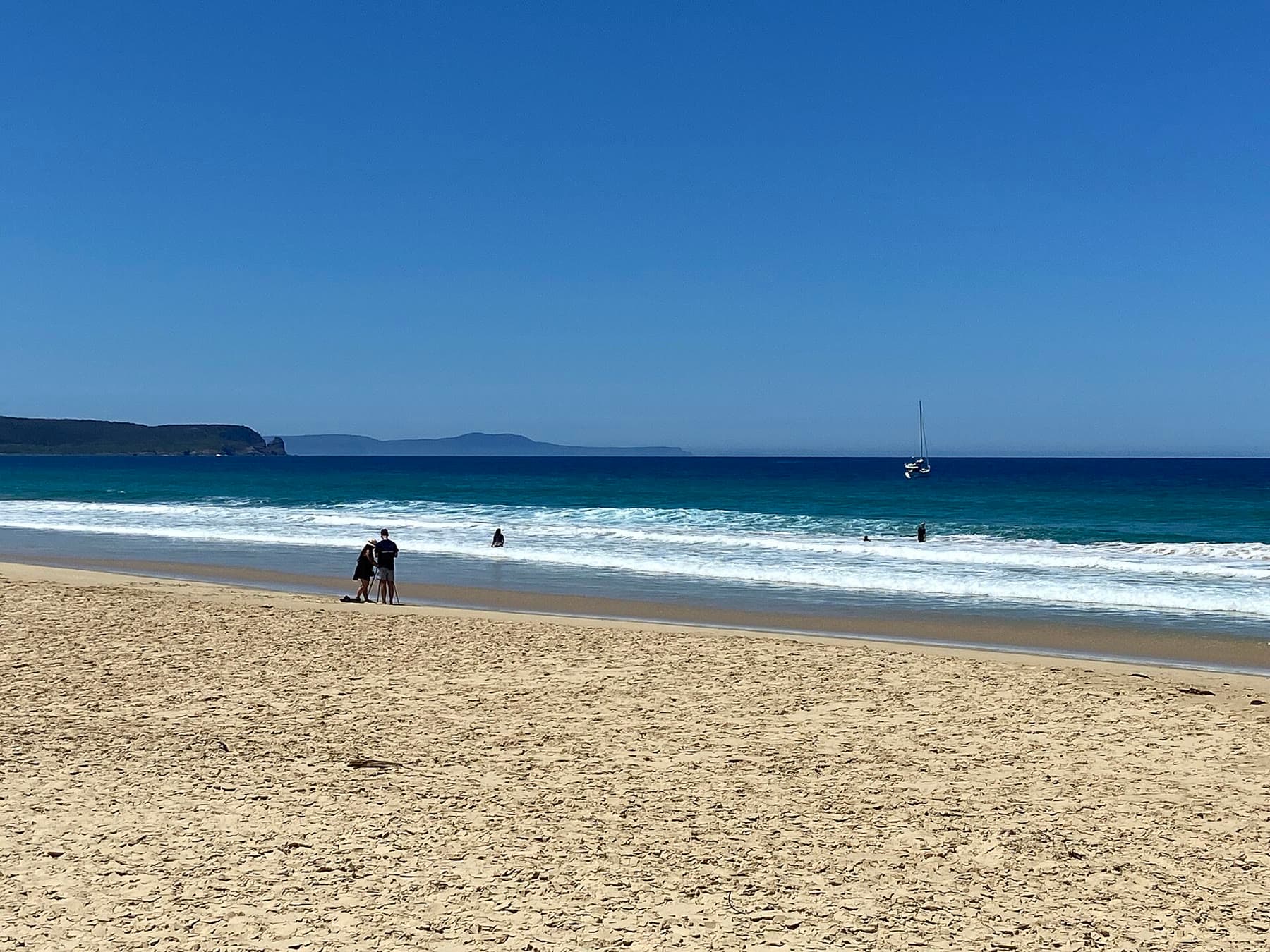
The default first-timer base on the east side of South Bruny. Sheltered beaches, the start of Grass Point and Fluted Cape, white wallabies in roadside paddocks at dusk, and the usual meeting point for coastal cruises (verify the operator). A general store has historically sold fuel and basics — confirm before you rely on it.
Adventure Bay is also the easy dusk run back to The Neck: you already know the road, and you are not crossing the whole island after penguin viewing. If you have one night and you have not been before, start here. Read things to do for the walks that begin on this beach.
Alonnah
The west-side service-village feel: school, pub, a sense of residents rather than only visitors. Useful if you want a dinner plan in the Hotel Bruny direction (verify opening days) and a shorter run toward Lunawanna and Lighthouse Road. You are further from Adventure Bay’s sand and closer to the channel’s evening light.
Alonnah is a good compromise when the group is split between food-trail days and a lighthouse morning.
Lunawanna
The T-junction for Cape Bruny. Stay here if the lighthouse is the reason you kept a night. You are further from the ferry and from some of the Great Bay food stops, and closer to Lighthouse Road (C629) and the park. Cloudy Bay is the other south-west reason people sleep this side.
Dennes Point and Barnes Bay
North Bruny, closer to Roberts Point. Quieter, often more residential, good when your trip is short and you do not want a long last-morning drive to the terminal. Less convenient for a dusk penguin run if you then have to recross the isthmus in the dark.
This is the stay for people who like a quiet house and a short hop, not for people who want to fall out of bed onto Fluted Cape.
Simpsons Bay and the Neck-adjacent south
Handy for The Neck itself. Check road noise, wind, and whether you are comfortable driving the isthmus after dark. Useful for penguin-first itineraries and for campers who want the rookery without a long return.
Camping
Parks Tasmania is the source of truth for national-park camping. The names visitors look for:
- The Neck campground — close to the lookout and penguin viewing. Facilities are basic; this is not a holiday park with a water slide.
- Jetty Beach — inside South Bruny National Park, near the Labillardiere walks.
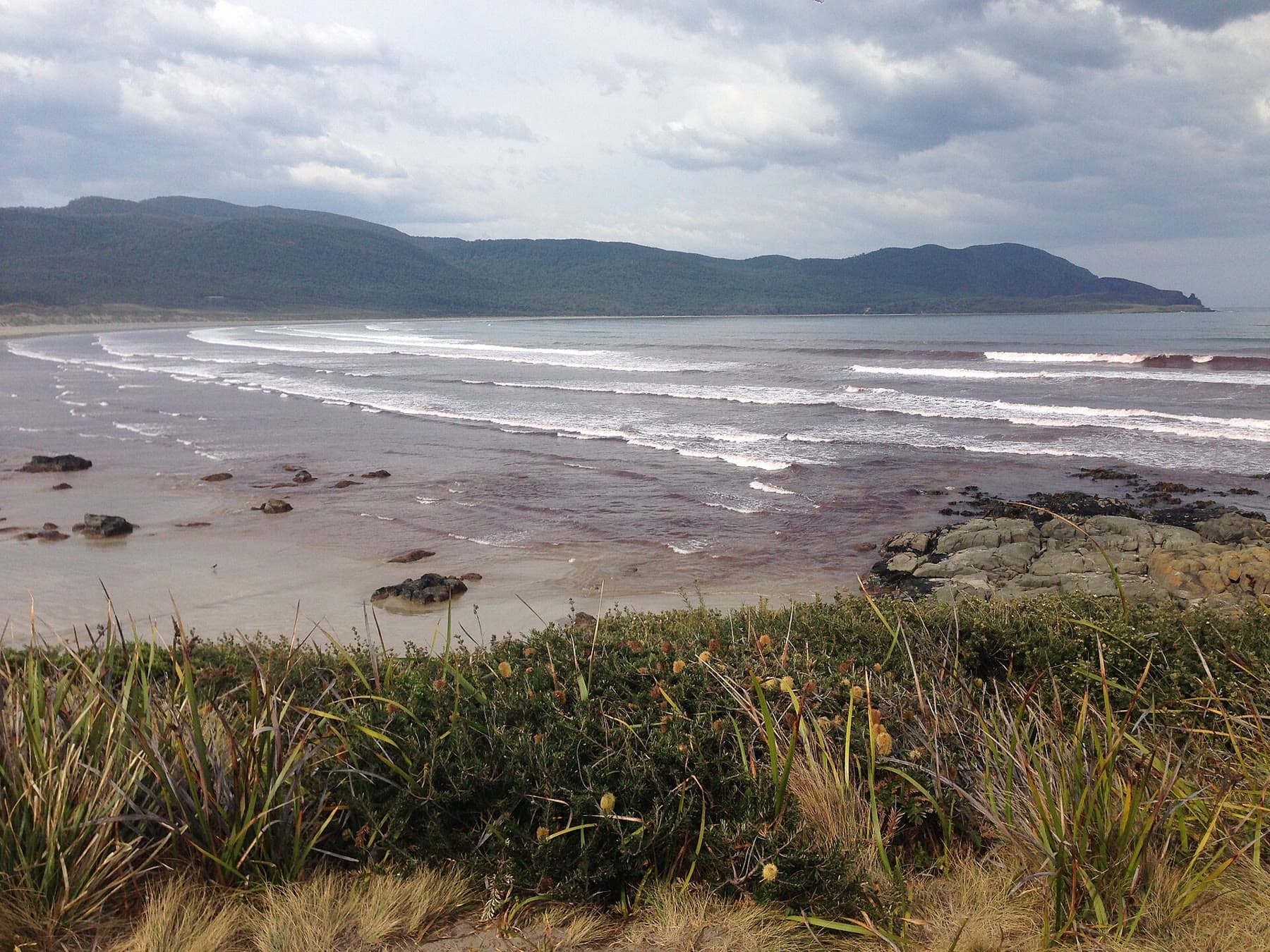
- Cloudy Bay — surf, wind, and a long beach. For people who already know they like exposed coasts.
A valid parks pass is part of staying in the park. Book on the Parks Tasmania channels. Carry some cash; do not assume reception or an ATM. Check fire restrictions, drinking water, and whether the site is suitable for your tent or camper — those details move.
Private camping and caravan sites appear and disappear. Verify anything you find on a third-party listing. Never treat a rookery, a dune, or a lookout car park as overflow camping.
What “book well ahead” means
Summer and Easter run out of ordinary houses while people are still reading oyster reviews. That is not a ranking claim; it is a small-island inventory fact. If you know you want penguins or a Saturday in January, lock a night before you romanticise the spiral staircase.
Shoulder seasons are kinder. Winter can be a bargain in mood if not always in price — and a reminder that heating matters. Tasmania is not a suggestion.
What this site will not do
We do not take bookings. We do not rank “best 10 Airbnbs.” We do not invent nightly rates. Property names from archive pages may be closed. If you need a specific house, search current listings and confirm:
- access after the last official ferry (and what happens if you miss it)
- heating (it is still Tasmania)
- whether the road is suitable for a low sedan
- generator, solar, or tank-water quirks
- pet rules
- cancellation terms that survive a cancelled cruise
Guest-house folklore from 2019 is not a booking confirmation.
Groceries, dinner, and the last kitchen
Island kitchens take nights off. If you land late, you can miss food entirely. Message the pub or café that morning. Adventure Bay and Alonnah are the usual dinner guesses; they are still guesses until you verify.
A house with a kitchen is how overnight trips stay calm. Bring some mainland supplies if you arrive after shop hours. The food guide is about cellar doors and farm gates, not a supermarket map.
Pets, kids, and night roads
Some holiday houses allow dogs. National park campgrounds, wildlife areas, and penguin platforms at The Neck are not that list. Never take pets onto viewing platforms or into rookery dunes.
Kids do well overnight because the day can end. The ferry feels like an event; the lookout stairs are a mission; cheese and wallabies break up the car. Supervise cliffs, the Neck road, and any lighthouse path. Fluted Cape is not a casual family circuit. The kids journal note is the longer version.
Night roads are a wildlife kill zone. If you drive after penguin viewing, drive as if every corner has a pademelon — because it does.
A simple decision
- One night, first visit: Adventure Bay.
- Lighthouse-first: Lunawanna or Alonnah.
- Ferry-first, quiet: Dennes Point.
- Budget / tent: Parks campground, booked, with a parks pass.
- Still only a lookout and a tasting: stay in Hobart and do the day trip honestly.
Then read the overnight journal note for what to book besides the bed — ferry process, dinner, optional tour — and the lighthouse visitor guide if the cape is why you stayed.
Day trip vs staying overnight
| Compare | Sleep in Hobart | Sleep on Bruny |
|---|---|---|
| Penguins | You will almost certainly miss dusk at The Neck. | Walk or drive to the rookery after dinner, then sleep nearby. |
| Lighthouse | A long out-and-back that steals the food trail. | A morning or afternoon with time for a tour. |
| Last ferry stress | The day is shaped by the return sailing. | You still need a sailing to leave — just not tonight. |
| Summer | Easier if rooms are gone. | Book well ahead. Inventory is finite. |
| Cost | Ferry and food only. | Add a night. Often the better spend. |
Questions
What visitors always ask
Stay at Adventure Bay for beaches and Fluted Cape; Alonnah or Lunawanna if the lighthouse is the point; Dennes Point if you want quiet and a shorter hop to the ferry. Verify each property — this is not a booking site.
Book the room before you romanticise the lighthouse
Summer and Easter inventory disappears while people are still arguing about the ferry. If you know you want penguins, lock a night first.