guides
Little penguins at The Neck
2026-09-23
Yes, you can see little penguins on Bruny Island after dusk at The Neck. Stay on the platforms, use no flash, and do not treat a wild rookery as a ticketed parade.
Yes. You can see penguins on Bruny Island. Little penguins (Eudyptula minor) come ashore after dusk at The Neck rookery, on the sand isthmus that joins North and South Bruny.
That sentence is the whole attraction and the whole constraint. They do not come in at lunchtime. A typical day trip from Hobart is finished before they start. If penguins are the point, stay overnight.
This is not a Phillip Island grandstand with reserved seats and a soundtrack. There is no guaranteed parade. Some nights are quiet. Some nights the platforms are crowded with people who brought the wrong light.
Where, when, and what else is there
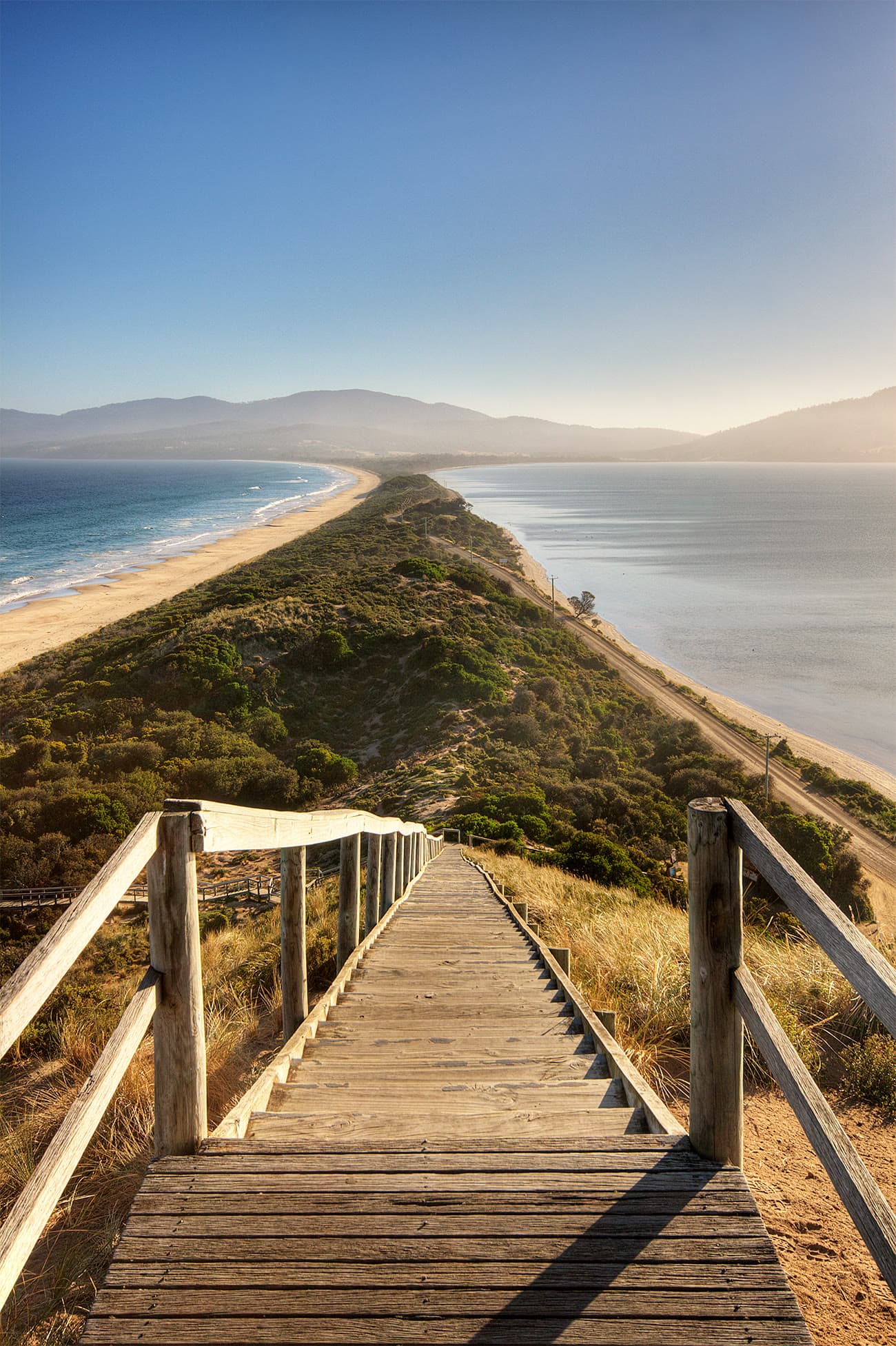
The Neck is a working isthmus: road, dune, two beaches, a steep timber stairway to Truganini Lookout. The lookout is a daytime photograph. The rookery is a dusk visit on formed viewing platforms below.
Short-tailed shearwaters (muttonbirds) use the same landscape in the warmer months — typically arriving in spring and leaving by autumn. They are part of the noise and the sky, not a second ticket.
We will not invent a nightly “showtime.” Dusk moves. Birds move. Follow on-site signs and any ranger or volunteer direction.
Rules that do not change when the sign fades
- Stay on the viewing platforms and formed paths. The dune is not a better angle; it is habitat.
- No flash. No bright white torch on the beach. Use only what signs allow (often a dim red light, and sometimes not even that).
- Do not pick up, chase, block, or call to a bird.
- Keep voices down. You are tolerated beside a commute, not hosted at a performance.
- Never stand in the road to film. Cars still use The Neck at night.
- No dogs on platforms or in the dunes.
- No drones over the rookery.
If you want a high-infrastructure penguin evening, go to a different product in a different state. Bruny’s version is wilder and more contingent — which is why it is worth the night.
How to make the night work
- Book a bed near the isthmus or at Adventure Bay so the drive home is short and known. Dennes Point is a long dark recross. See where to stay.
- Do the lookout in daylight if you also want the photograph. Do not make tired kids climb stairs at 8pm and then stand still.
- Eat first. Island kitchens take nights off — verify. A house meal is calmer than a hangry platform.
- Drive to The Neck slowly. Drive home slower. Pademelons and wallabies use the same road. Night driving kills wildlife.
- Dress as if the channel is colder than Hobart. It is.
- Leave if the birds are not showing. The privilege is being allowed to wait, not being owed a parade.
There is a Parks campground near the lookout if dusk is the whole trip. Book via Parks Tasmania. Do not freelance a tent on the sand.
Day-trip temptation
People ask whether a very late official sailing makes a same-day penguin visit possible. The only honest answer is: check SeaLink, then decide whether you want to drive wildlife roads in the dark toward a terminal queue. Most visitors should not. The ferry page will not invent a last boat.
If you only have a day, enjoy The Neck as geography. Come back with a night if the birds are why you came.
Kids and ethics
Children generally love this if they can be quiet and warm. They do not love it if they are promised a show. Explain the rules before you leave the car. The kids note covers the rest of the island.
A rookery degrades when everyone wants a better photo than the platform allows. The picture at the top of the stairs in daylight is already the famous one. At dusk, your job is to be dull and still.
For the broader Neck visitor guide — stairs, isthmus, shearwaters, parking — start with What is The Neck on Bruny Island?. For whether the extra night is worth it, use the overnight booking list.
What little penguins are, without a lecture
Little penguins are the smallest penguin species. They come ashore to burrows after dark. They are not a mascot and not a guarantee. Weather, swell, dogs, lights, and a loud platform all change what you see. A quiet night is still a successful visit if you followed the rules.
Shearwaters in season can be the louder story. Do not treat either bird as a reason to leave the path. Hooded plovers nest on Tasmanian beaches in other months and other coves — give shorebirds space wherever you walk.
If you only remember three words after the lookout photograph, make them: platforms, no flash, slow drive. The rest of Bruny — food, walks, the lighthouse — can wait until morning.